Rift
A research prototype testing if visual, audio, and response signals can estimate how different viewers may react to the same short video.
- Role
- Product design and research engineering
- Disciplines
- Research engineering, Machine learning, Product design
Context
Most content tools tell you what performed well after it was posted, or score visible features such as pacing, captions, and color. I was more interested in a harder question: why can the same clip hold one person’s attention and lose someone else almost immediately?
Insight
Predicting success is too broad to test honestly. I narrowed the project to a smaller question: do aligned visual, audio, and experimental response signals contain enough structure to estimate relative viewer response better than simple baselines?
System
Rift turns each piece of media into aligned visual and audio features, pairs them with response measurements from the dataset, and tests the model on media it did not train on. The result is compared with simpler methods before I treat it as evidence.
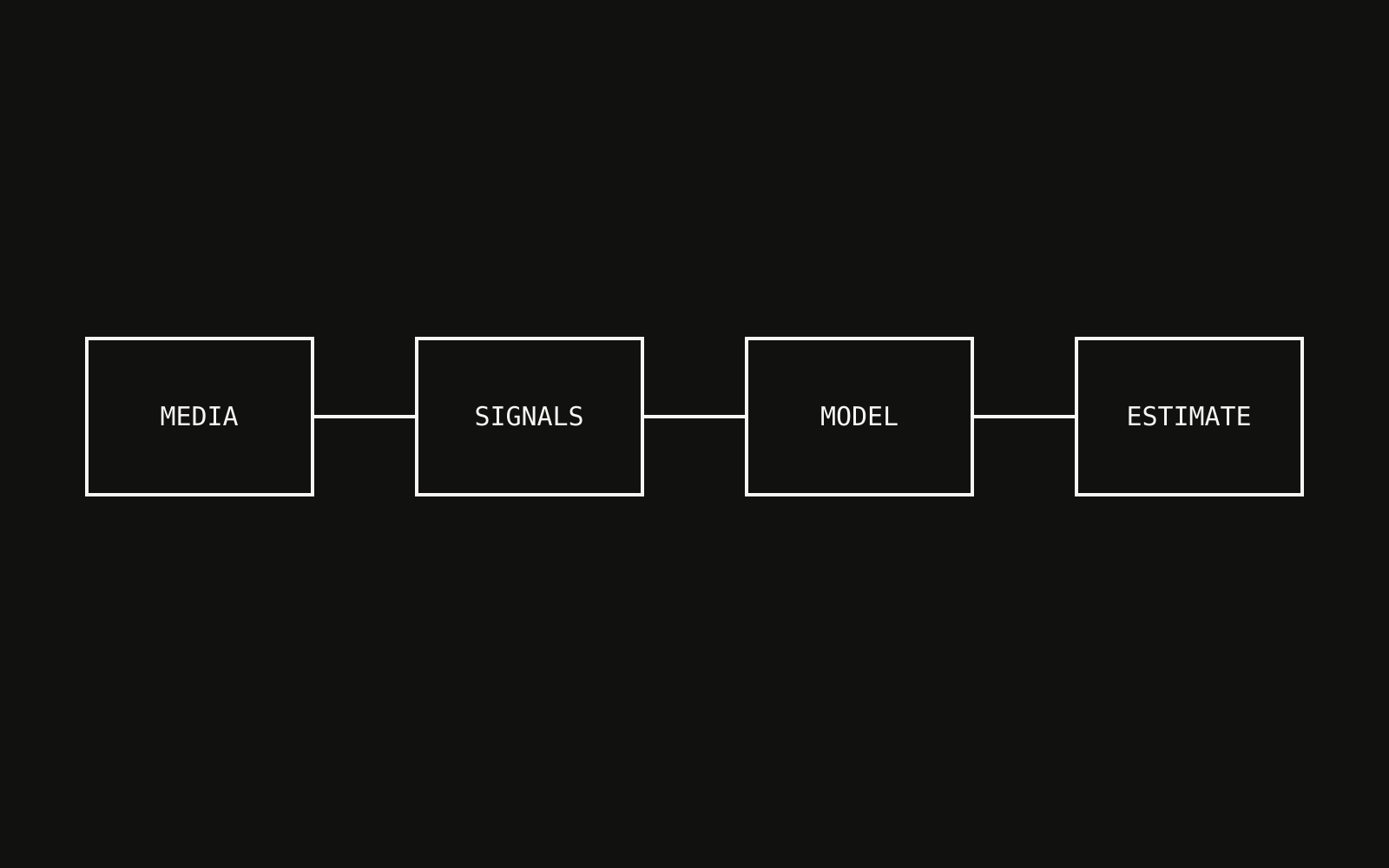
What the experiments measured
Some internal runs beat the dataset mean and ridge baseline on the brain-response objective. The engagement-correlation representation beat shuffled controls but did not consistently beat ridge. The dataset is small, so those results help choose the next experiment; they do not support a product claim.
Decisions
- Write down what was measured
A benchmark result and an idea about a future product stay separate.
- Hold out whole media packs
The model is tested on unseen examples instead of being rewarded for fitting the material it already saw.
- Let the evidence limit the interface
The product cannot give stronger advice than the validation behind the estimate.
- Keep the dark treatment inside the figures
Rift can look different without turning the entire portfolio into a separate dark site.
Experience
Reflection
The experiments suggest there is learnable structure in viewer response, but several simple baselines remain competitive and the dataset is still small. The next useful work is more held-out data, clearer per-viewer evaluation, and a better account of when the model is wrong. I am keeping Rift in research until that exists.