Starline
A researched index that helps high school students find internships, understand eligibility, and build a credible application.
- Role
- Product design, research, and engineering
- Disciplines
- Product design, Web engineering, Search and information architecture, Opportunity research
Context
Most high school internship lists are either small, outdated, or difficult to search. A student can find a promising title and still have no clear answer about eligibility, location, timing, or what a competitive application should contain.
Insight
The useful product was not another spreadsheet of links. Students needed a catalog that separated confirmed high school opportunities from uncertain ones, surfaced relevant fields such as law and computer science, and explained what each employer was likely to value.
System
Official employer pages and authorized job boards become structured records. Each record is checked for eligibility language, tagged by field and location, paired with a practical guide, and published as both a searchable card and a crawlable page.
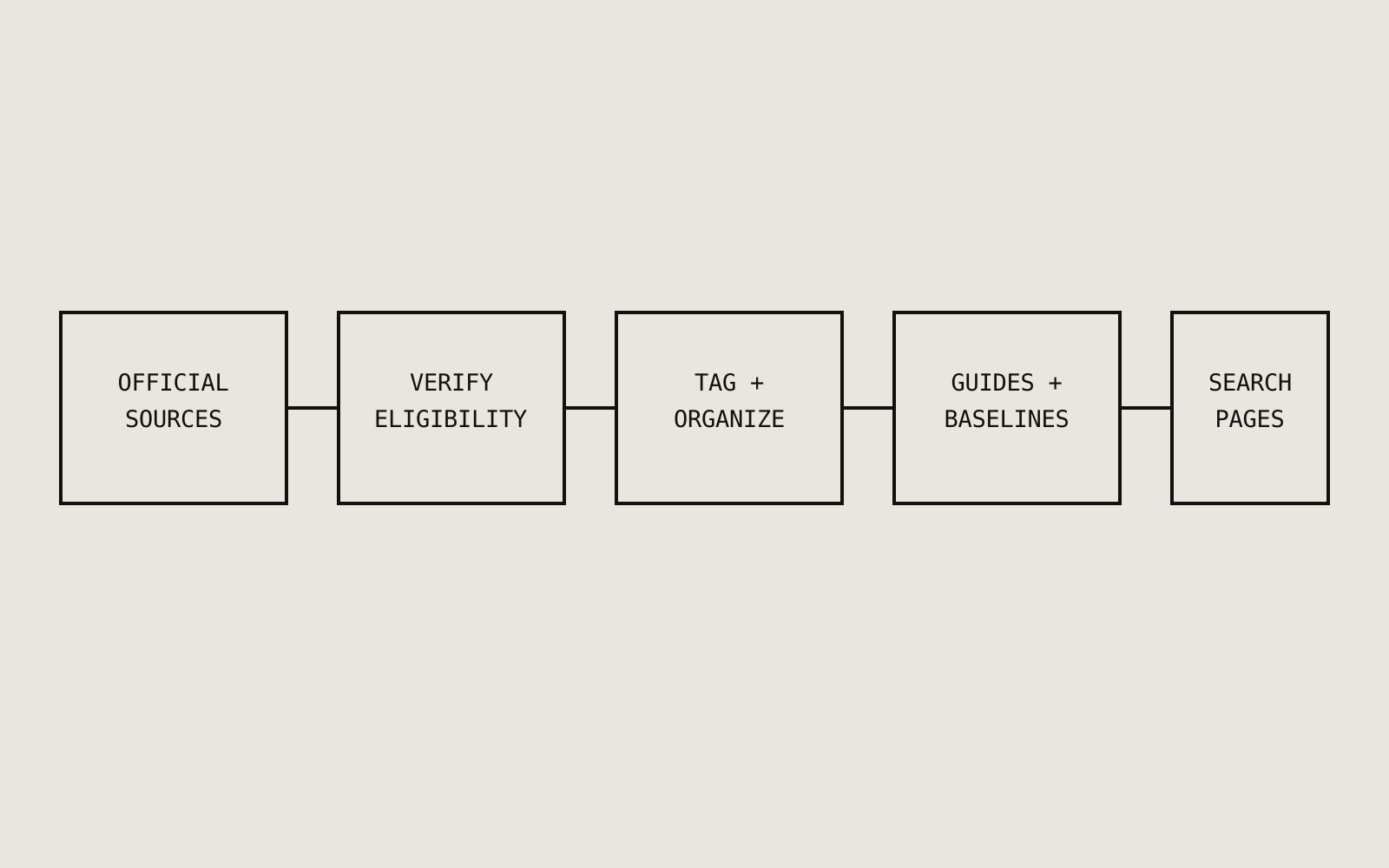
How search and publishing work together
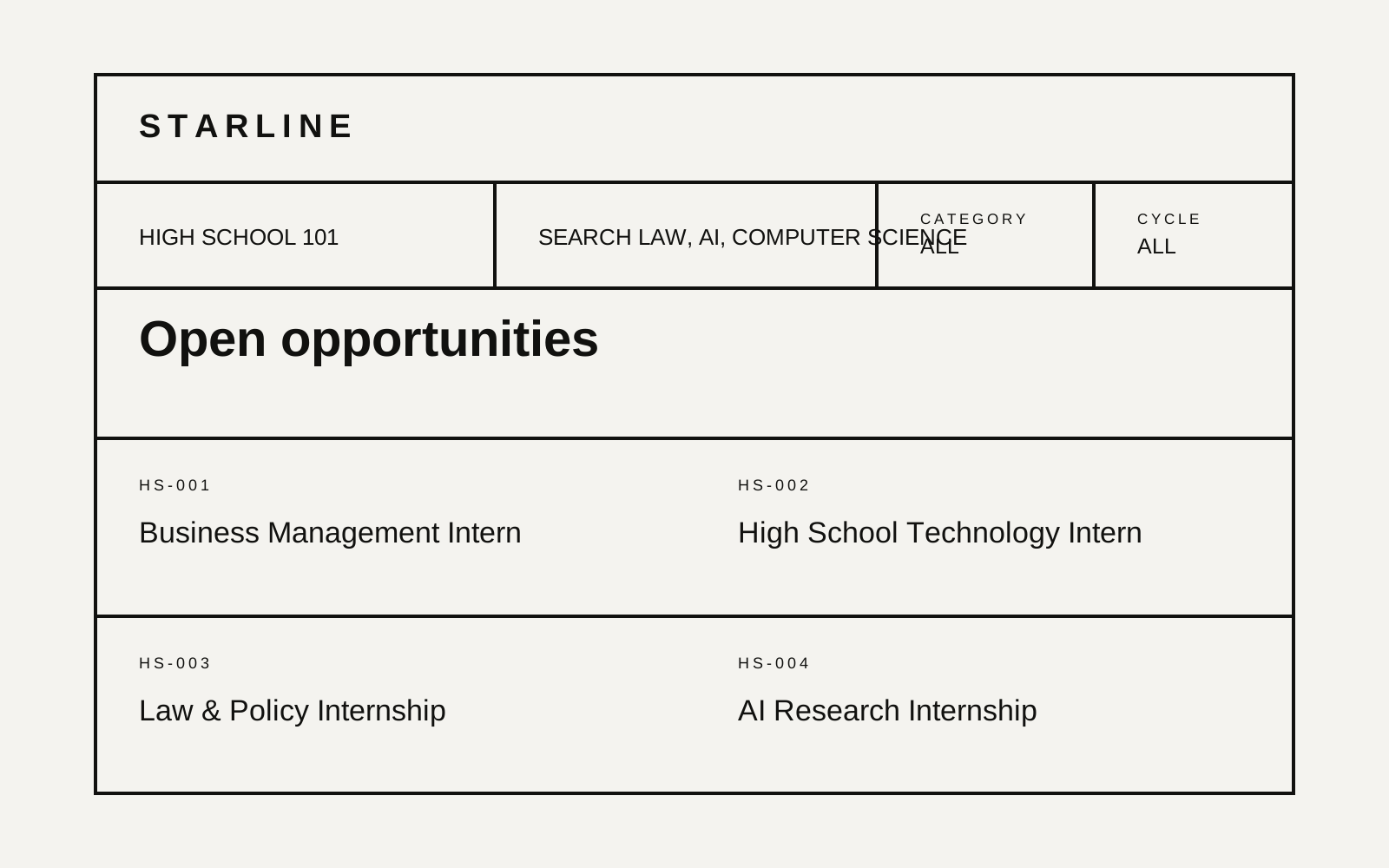
The catalog uses semantic aliases so terms such as law, legal, policy, AI, machine learning, computer science, coding, and software return the same underlying pathways. The same records generate static metadata, structured data, sitemap entries, and application guides, which prevents the search interface and indexed pages from drifting apart.
Decisions
- Keep the employer page as the source of truth
Every guide links back to the official or authorized listing instead of presenting Starline as the final authority on deadlines or eligibility.
- Label uncertainty directly
When a listing does not explicitly confirm high school eligibility, the card says that confirmation is required.
- Use one guide standard
Every opportunity receives the same compact six-step application guide and competitive baseline structure, while the evidence changes by role.
- Generate crawlable pages
Each opportunity has a static page, canonical URL, structured data, and source context rather than depending entirely on a client-side search interface.
Experience
Reflection
Starline now contains more than one hundred high school opportunities and a separate college technology feed. The next challenge is operational rather than visual: keeping every listing current, expanding weak categories without lowering the verification standard, and measuring whether the guides help students submit stronger applications.